Smarter oncology second opinion — AI-powered, expert-reviewed, using your existing NGS report.
Read More


New approach rescued clinically important genomic findings that automatic filtering would have discarded, pointing to a high-scoring therapy option in an additional roughly 10% of cases.
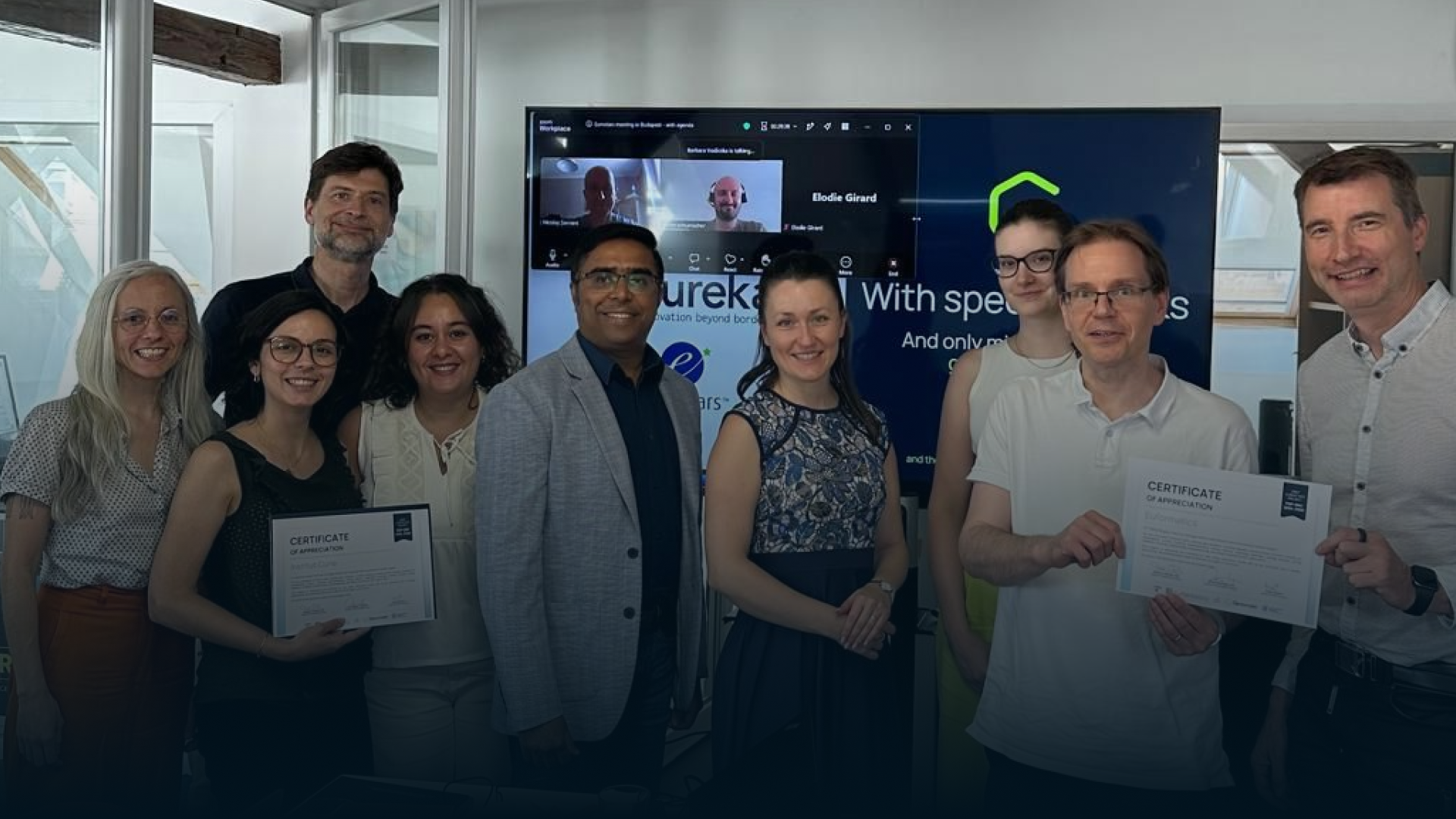
Budapest, Hungary; 27 July 2026 – Euformatics (Finland), Institut Curie (France), Oncompass Medicine and Genomate Health (Hungary) have successfully completed their 2.5-year Eurostars project, Precision Oncology Platform with Genomic Noise Cancellation, marking the milestone with a closing consortium meeting held in Budapest.
The project brought together leading expertise in bioinformatics, clinical oncology, precision medicine decision support, and real-world oncology data to address a key challenge in genomic medicine: how to reduce genomic noise caused by the large number of biologically non-relevant alterations and alterations generated by inherent errors of sequencing of thousands of bases without losing clinically important variants.
In routine molecular diagnostics, automated filtering steps during the bioinformatic analysis are essential to reduce the noise of false signals and help clinicians focus on variants that are likely to be clinically relevant. However, in some cases, clinically important variants with low or ambiguous quality signals are filtered out using flat quality thresholds before they can be assessed in the clinical context.
Today, the process largely depends on the bioinformatician's experience and subjective judgment to detect clinically relevant genomic alterations, which should be manually double-checked to avoid automated filtering. This poses a risk to cancer patients.
Similar to noise canceling, we need a more advanced technology that not only reduces background noise but also enhances the strength of the important genomic signal when signal quality is poor, and the signal can be lost in the noise, to automatically flag these for human manual check.
In this project, the consortium successfully implemented Genomate’s unique computational precision-oncology reasoning technology to automatically flag such “not-to-be-missed” variants, ensuring that all clinically relevant molecular information is identified, supporting a more sensitive and clinically informed interpretation workflow to find the right personalized therapy for all cancer patients. Genomate’s technology was connected to Euformatics’s bioinformatics platform to develop a joint prototype designed to create a complete bioinformatics workflow in the diagnostic process.
“Reducing genomic noise is not only a technical challenge; it is a clinical challenge,” said Christophe Roos, Chief Scientific Officer of Euformatics. “The project demonstrated that bioinformatics workflows can be made more sensitive and more clinically aware when variant interpretation and treatment relevance are brought closer together.”
Using securely managed, confidential data from Institut Curie, Euformatics and Genomate Health built a prototype workflow that helps reduce genomic noise while preserving potentially actionable findings. In the project dataset, rescued variants enabled a high-scoring treatment option in 9% of evaluated patient cases, suggesting that the approach may reveal new therapy options in a clinically meaningful subset of patients.
A distinctive feature of the Genomate® approach is its focus on outcome prediction. While many decision-support systems and AI approaches are benchmarked against similarity to expert recommendations, the technology aims to go one step further: to estimate whether an individual patient is likely to benefit from a targeted therapy. This outcome-oriented approach - tested on molecular tumor board data from Institut Curie - was presented by Genomate Health researchers at AACR 2026 and at the AI in Oncology conference in Paris.
“For Genomate Health, this project was an important step toward connecting high-quality genomic interpretation with patient-level treatment benefit prediction,” said Dr. Barbara Vodicska, Head of Translational Science at Genomate Health. “The ability to rescue potentially relevant variants and then evaluate their therapeutic relevance through an outcome-oriented scoring system is exactly the type of innovation needed to make precision oncology more actionable, evidence-based, and scalable.”
Taken together, the results of the Eurostars project support the potential of integrating bioinformatics quality assessment, genomic noise reduction, and outcome-predictive treatment ranking into a more robust precision oncology workflow. The consortium believes that this approach warrants prospective clinical studies and may, in the future, help streamline access and reimbursement decisions for molecularly guided therapies by providing stronger evidence on expected patient benefit.
“The strength of this project lies in bringing together expertise from across the precision oncology ecosystem," said Dr. Edith Borcoman, project lead and medical oncologist at Institut Curie’s Drug Development and Innovation Department, and leader of the Institut Curie Molecular Tumor Board. "By combining advanced bioinformatics, computational reasoning, and clinical validation, the consortium has developed an innovative approach to reducing genomic noise while preserving clinically meaningful findings. Genomate warns us when genomic findings deserve a second look, providing an additional layer of quality control that has the potential to improve the consistency and quality of molecular interpretation and make precision oncology more evidence-based and ultimately more beneficial for patients.”
The project also advanced the partners' regulatory readiness, with IVDR1 compliance a central consortium objective. IVDR-related audits were conducted at both participating companies during the project period, and both are now progressing toward IVDR certification.
The successful completion of the Eurostars project marks an important milestone for the consortium and lays the groundwork for future clinical validation, prospective studies, and continued collaboration between the partners.
“No patients are left behind, and we turn every stone to find the right therapy for cancer patients for the first time and every time. Integrating Genomate’s automated reasoning into the beginning of the diagnostic process gives another layer of security for our patients,” added Dr. Istvan Petak, Founder and Chief Scientific Officer of Genomate Health and Founder of Oncompass Medicine.
About the Eurostars Project
The Eurostars-funded project Precision Oncology Platform with Genomic Noise Cancellation was launched to develop an end-to-end oncology solution capable of improving genomic variant interpretation by reducing noise while preserving clinically relevant signals. The project was carried out by Euformatics, Oncompass Medicine, Genomate Health, and Institut Curie over 2.5 years.
About Euformatics
Euformatics is a Finnish software company specializing in high-standard bioinformatics tools for genomic data interpretation and quality management. Since 2010, Euformatics has supported clinical laboratories and healthcare providers with solutions for NGS data quality control, variant interpretation, and reporting. To learn more, visit: euformatics.com
About Institut Curie
Institut Curie, France’s leading cancer center, combines an internationally-renowned research center with a cutting-edge hospital, treating all types of cancer, including the rarest ones. Founded in 1909 by Marie Curie, Institut Curie employs 4,000 researchers, physicians, and health professionals across three sites (Paris, Saint-Cloud, and Orsay), all of whom contribute to its three missions of treatment, teaching, and research. As a public-interest foundation authorized to receive donations and bequests, Institut Curie relies on donor support to accelerate scientific discovery and improve treatments and quality of life for patients. To learn more, visit: curie.fr
About Genomate Health
Genomate Health develops precision oncology decision-support solutions designed to help identify the most relevant targeted therapy options for individual cancer patients. Its proprietary technology, Digital Drug Assignment or Genomate®, integrates molecular profiles, tumor context, drug evidence, and clinical relevance into an outcome-oriented treatment ranking approach. To learn more, visit: genomate.health
About Oncompass Medicine
Oncompass Medicine is a Hungarian pioneer in precision oncology, integrating molecular diagnostics, advanced bioinformatics, and oncology decision-support tools to guide personalized cancer therapy. The company has been at the forefront of applying molecular diagnostics in solid tumors as companion diagnostics in 2003, next-generation sequencing in 2008, and mathematical modeling to identify effective targeted treatments for patients as early as 2014, earning international recognition for its innovations in personalized medicine. To learn more, visit: oncompass.hu
Genomate Health / Oncompass Medicine
Alina Luchian - alina.luchian@genomate.health
Institut Curie
Catherine Goupillon-Senghor - +33 06 13 91 63 63 - catherine.goupillon@curie.fr
Elsa Champion - +33 07 64 43 09 28 - elsa.champion@curie.fr
1. The In Vitro Diagnostic Regulation (IVDR, Regulation (EU) 2017/746) is the European regulatory framework governing in vitro diagnostic medical devices, ensuring their safety, quality, and clinical performance before and after market access.
.avif)